
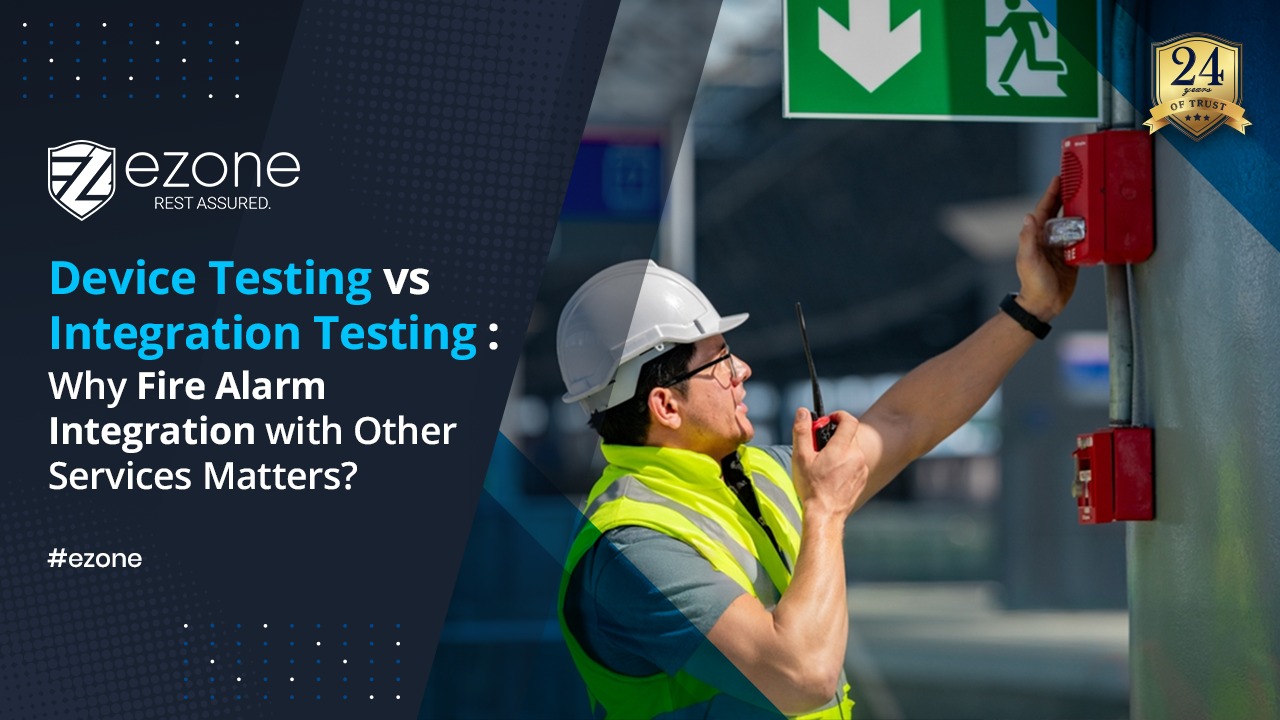
During a routine fire alarm inspection, a technician might trigger a smoke detector, watch the panel respond, and hear the alarm sound across the floor. Everything appears normal. The detector works, the signal travels, the alarm activates.
But that small test doesn’t reflect what actually happens during a real fire event.
In most buildings today, the fire alarm system doesn’t act alone. The moment a detector activates, several other systems are supposed to react. Ventilation may need to shut down. Elevators should move to a safe level. Doors controlled by access systems must release automatically. In some buildings, announcements guide people out.
When those connections work properly, evacuation becomes faster and safer. When they don’t, the building may have working alarms but a fragmented response.
That gap is where fire alarm integration with other services becomes important.
What Actually Happens During Integration Testing
Integration testing looks at what happens after the detector sends its signal.
Instead of watching only the alarm panel, technicians observe how other systems behave. Does the HVAC unit stop? Do elevators move to the correct floor? Do access-controlled exits release immediately?
Sometimes everything responds exactly as expected. Other times, small configuration gaps appear — a delayed response, a missing command, or a connection that stopped working after a system upgrade.
These issues are easy to miss if the focus stays only on devices.
The Multi-OEM Reality of Most Buildings
Very few commercial facilities run on a single technology ecosystem. Over time, buildings accumulate different systems from different manufacturers.
The fire alarm may come from one vendor.
The HVAC control system from another.
Access control from a third.
Elevator controls from yet another.
Each system works perfectly well on its own, but they don’t always communicate effortlessly.
When integrations are first commissioned, everything may work correctly. Years later, after updates, replacements, or configuration changes, those links can weaken without anyone noticing.
That’s why buildings with multiple technologies often benefit from periodic integration reviews, not just device checks.
Where ezone Comes In
Across the facilities ezone supports, this pattern appears often. The detection system itself may be well maintained, yet interactions with other building systems receive less attention.
With more than two decades of experience managing building technologies under AMC contracts, ezone teams regularly work in environments where fire alarms connect with HVAC infrastructure, access systems, elevators, and building management platforms.
Looking at these systems together often reveals small inconsistencies — commands that don’t trigger, signals that take longer than expected, or integrations that stopped working after a configuration change.
Addressing these issues requires understanding how the systems talk to each other, not just how they function individually.
Keeping Track of What Happens on Site
When multiple systems interact, service documentation becomes just as important as the technical work itself.
ezone manages this through its eCare CRM platform, where service activities are logged from the moment a request is raised. Engineers record what was checked, what adjustments were made, and how systems behaved during testing.
For facility teams, these records make it easier to understand the history of their systems. Instead of relying on scattered notes or memory, they can review when integrations were checked and how issues were resolved.
In buildings where several technologies interact, this visibility becomes valuable over time.
Conclusion
Fire safety discussions often focus on detectors, panels, and alarm sounders. Those components are essential, but they represent only one part of the response.
In real situations, the building itself needs to react — ventilation slowing down, elevators relocating, exits opening automatically.
When those responses align, the system feels seamless. When they don’t, the gap becomes obvious.
That’s why fire alarm integration with other services matters just as much as the devices themselves.
Because in an emergency, it’s not just about whether a detector works.
It’s about how the entire building responds once it does.
Call +91 98483 98483 or visit www.ezonesecurity.com for more information.